


Tartan in Cornish history
The Celts were ever lovers of colour, and the Celtic weavers of bygone ages were most ingenious artists, manufacturing woolen cloth that astonished other nations by its richness and singularity. Their method of dyeing the material and its fabrication was unique: both warp and woof were woven in alternate colours.
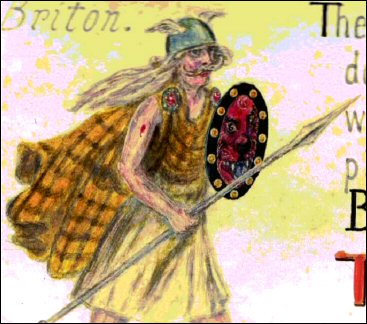
Contemporary with the Romans, the Celts of both the western continent (Brittany) and Britain wore the same chequered or tartan garments, described by the Romans as "braccaë", and indeed in the Welsh, Cornish and Breton languages the equivalent term is “brythen"; also chequered or tartan, and hence the derivation of their name "BRYTHEN" or "Briton". The tartan upper garment of the Ancient Briton was no doubt the prototype of the plaid of the modern Highlander, with this difference: where as the Highlander pins his plaid with a single brooch to his left shoulder, the British Celt pinned his brooch on both shoulders.
History records that the Cornish after the Kings were displaced fought hard to preserve their culture, customs and way of life, we know kilts were banned on fear of death in Scotland but there is no record of this censorship in Cornwall but history records there were 8 major Cornish rebellions in 100 years and an estimated 8 in 9 male adults died fighting. Since the designing of the first modern Cornish Tartan in the 1950’s by E.E.Morton-Nance, several others have been produced. The Cornish world wide have accepted the Cornish Tartan as the revival of their national dress and part of the Cornish Culture.